
Render Cleaning in Nottingham
Professional soft wash render cleaning that kills algae, lichen and black streaks at the root — without damaging your render. We clean K-Rend, monocouche, pebble dash, sand & cement and silicone render. We never pressure wash render.
Never Let Anyone Pressure Wash Your Render
It's the number one mistake we see — homeowners or unqualified cleaners reaching for a pressure washer to tackle green algae on render. The result is almost always permanent, expensive damage. After 25 years working as a Local Authority Cleaning Inspector and running Stardust Cleaning, here's what we see when pressure washing has been used on render:
- Stripped silicone coating on K-Rend and monocouche, exposing inner colour and leaving permanent patchy marks
- Loose pebbles knocked out of pebble dash, leaving bald patches that can't be repaired
- Water forced behind the render through hairline cracks, causing freeze-thaw blow-outs the following winter
- Damaged surface texture on sand & cement render, leading to faster re-soiling
- Failed render bond where high pressure has compromised the substrate adhesion
The right way: Soft washing uses professional biocide chemistry at low pressure to kill algae at the root. The chemistry does the work, not the pressure — which is why properly soft-washed render stays clean for 2-3 years and doesn't get damaged in the process.
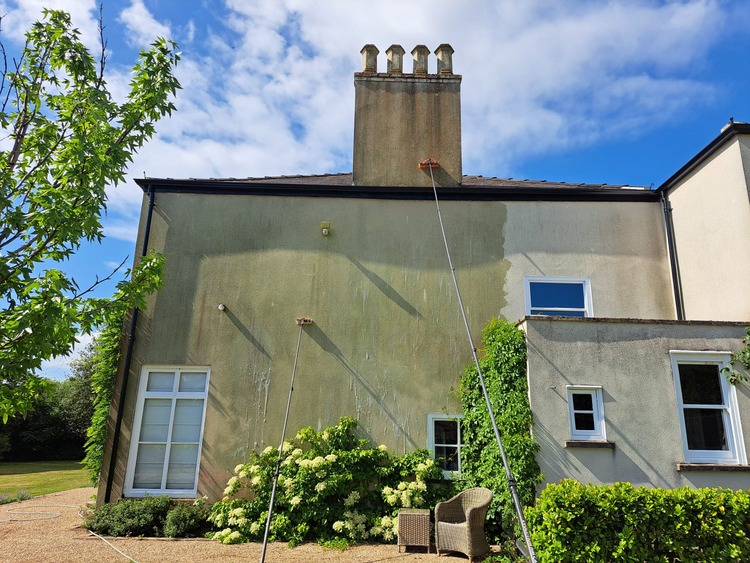
 ✓ The safe alternative
Soft washing in action on heavily algae-stained render — low pressure, professional biocide, zero damage to the surface
Render Cleaning Prices
Transparent pricing based on the area of render. Free no-obligation quotes — we'll measure accurately before any work begins.
Soft Wash Render Cleaning
Professional biocide treatment for all render types. Kills algae, lichen and black streaks at the root.
Typical 3-Bed Semi
Around 60-80m² of render across all elevations. Most common job size in Nottingham.
Minimum Charge
Applies to all render cleaning jobs. Covers travel, chemicals, plant protection setup and equipment.
Render Types We Clean
Every render is different. Knowing what's on your wall — and choosing the right approach — is the difference between a proper clean and an expensive mistake.
K-Rend & Silicone Render
Through-coloured silicone-based render with a self-cleaning water-repellent coating. Common on new-builds and recent self-builds. The silicone coating is delicate — pressure washing destroys it permanently. We use a heavily diluted biocide formulated specifically for silicone surfaces.
Monocouche
Single-coat, through-coloured render popular on modern developments. Like K-Rend, the colour goes all the way through, so any surface damage exposes the inner layer permanently. Soft wash treatment lifts surface contamination without compromising the protective outer layer.
Pebble Dash & Roughcast
Traditional textured finish with embedded pebbles or aggregate. Common on inter-war semis and 1960s housing across Nottingham. The deep texture holds dirt and algae — soft washing penetrates the surface without dislodging the stones, which pressure washing always does.
Sand & Cement Render
The traditional render finish — typically painted with masonry paint over a sand and cement base. Hard-wearing but the painted surface accumulates atmospheric staining and algae. Soft washing cleans the paint layer without stripping it. Heavy pressure can cause the paint to peel or flake off.
Lime Render
Found on older period properties, lime render is breathable and softer than modern alternatives. It needs the gentlest possible approach — heavily diluted biocide and absolute minimum water pressure. For listed buildings, we sometimes recommend a steam-based heritage system or refer you to a specialist.
Acrylic & Polymer Render
Plastic-modified renders applied as a thin top coat. More flexible than traditional render but still vulnerable to high pressure stripping the surface. We adjust biocide concentration and dwell time based on the specific product — a quick test patch confirms the right approach.
Not sure what type of render you have? Send us a few photos and we'll identify it from the texture and finish.
Why Does Render Go Green or Black?
Understanding what's actually growing on your render makes it obvious why pressure washing fails and soft washing works.
Green Algae
Single-celled plants that thrive on damp, shaded surfaces. They feed on rainwater and atmospheric nutrients. Spores spread on the wind and root themselves into the textured surface of render — once established, they keep coming back without proper biocide treatment.
Black Streaks & Mould
The dark vertical streaks below windowsills, gutters and roof edges are usually a mix of black algae and atmospheric pollution carried by rain. They follow water flow patterns down the wall — which is why they always look worst under leaking gutters or weathered window frames.
Lichen
Slow-growing crusty patches in greys, oranges and yellows. Lichen is a partnership between fungi and algae and is harder to remove than plain algae. Heavier biocide concentration and longer dwell time are required — and lichen sometimes needs a follow-up treatment.
Tree & Vegetation Cover
Properties under trees or with mature shrubs against the walls have constant shade and damp — perfect conditions for algae. Leaf debris and bird droppings add nutrients. The walls behind those nice mature plantings often have the worst staining.
North-Facing Walls
Walls that get little or no direct sunlight stay damp for longer after rain. In Nottingham's climate, that's enough to give algae a permanent foothold. A north-facing rendered gable will always need cleaning more often than the south-facing front elevation.
Leaking Gutters & Downpipes
One of the most common culprits we see. A blocked gutter overflows down the render, creating a permanent damp stripe that algae moves into within months. Cleaning the render alone won't fix this — the gutter has to be sorted first or the staining returns.
How Soft Washing Actually Works
It's not just "low pressure cleaning". The chemistry is doing the work — here's how.
Chemistry First, Pressure Last
Soft washing applies a professional sodium hypochlorite-based biocide at low pressure (typically under 100 PSI — about the pressure of a garden hose). The biocide kills algae, lichen and black mould at the root, including the spores that pressure washing leaves behind to re-grow within months.
The treatment dwells on the wall for 15-30 minutes. During this time, the chemistry is breaking down the cell walls of the organisms growing on your render. We then either gently rinse with low-pressure water, or — for many jobs — leave the treatment to weather. The rain finishes the job over 4-12 weeks, with results progressively improving.
This is why soft washing typically delivers 2-3 years of clean render, while pressure washing (which only knocks the visible growth off the surface) often shows re-growth within 6-12 months.

The Soft Wash Process in Action
Real Nottingham render jobs from start to finish — first the method in action, then the finished result on a completed job. The full transformation continues for several weeks afterwards as rain gently weathers the dead algae away.
Soft wash in action — Nottingham render clean
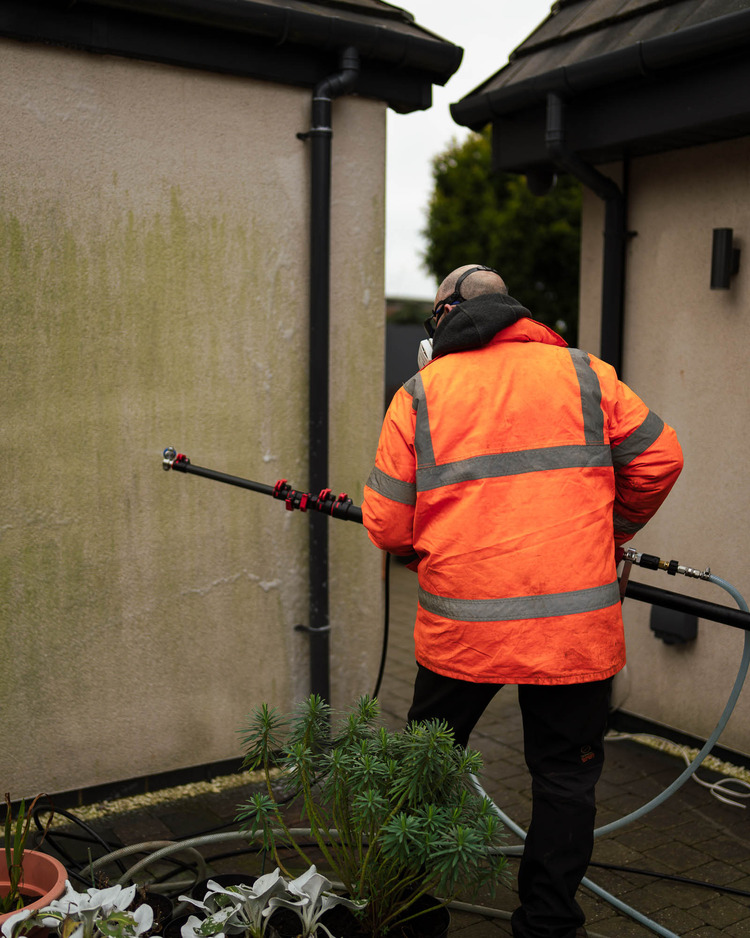
 During treatment
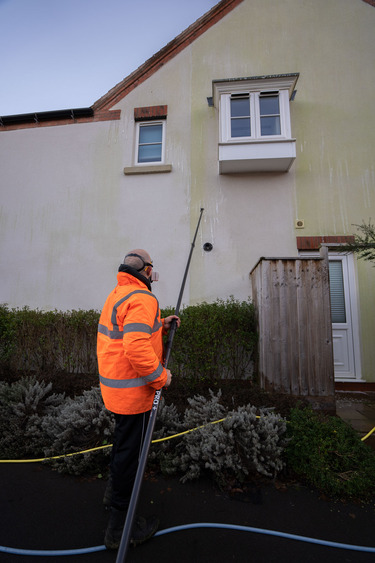
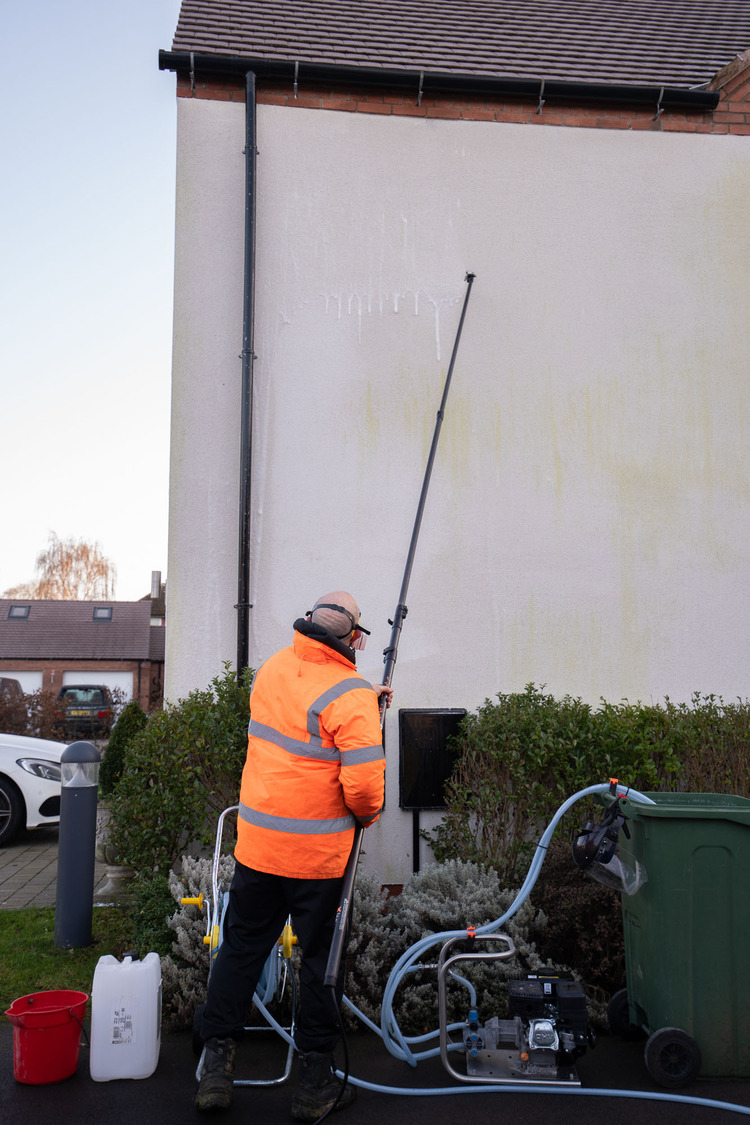 During treatment
Mid-treatment on a Nottingham property. Soft wash biocide is applied at low pressure using extending poles — no scrubbing, no jet washing, no risk to the render. The treatment kills algae and lichen at the root, with the dead growth weathering away cleanly over the following weeks.
The finished result — a fully restored render
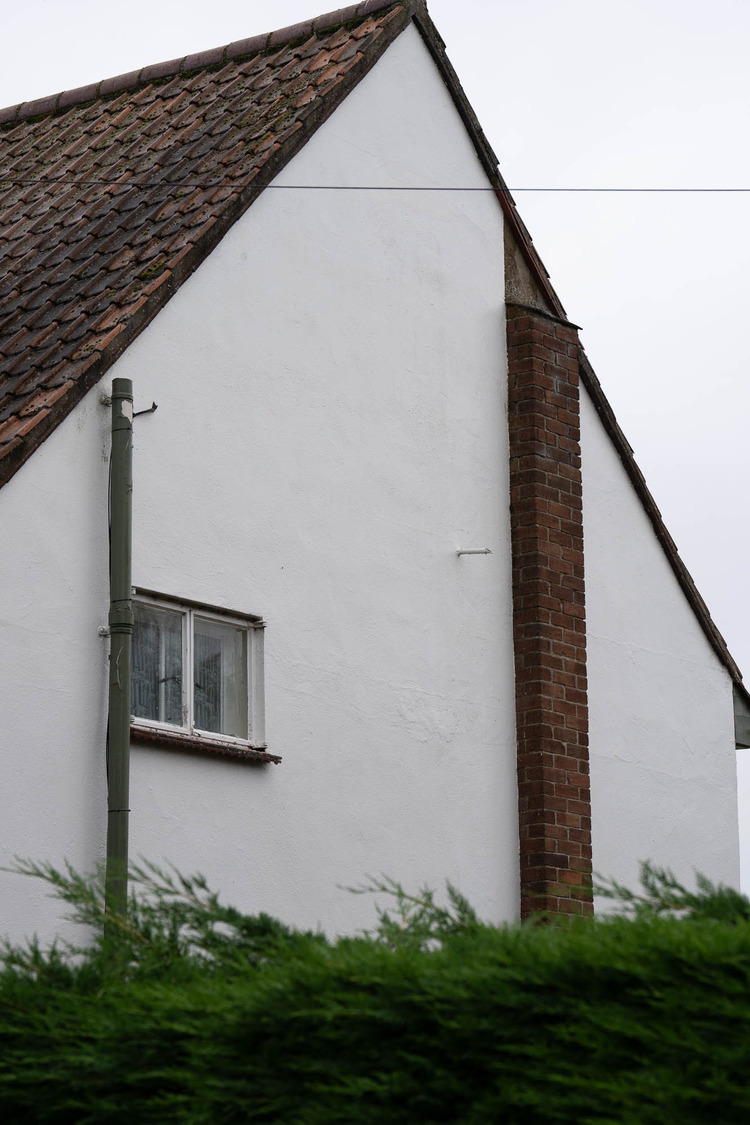 Finished
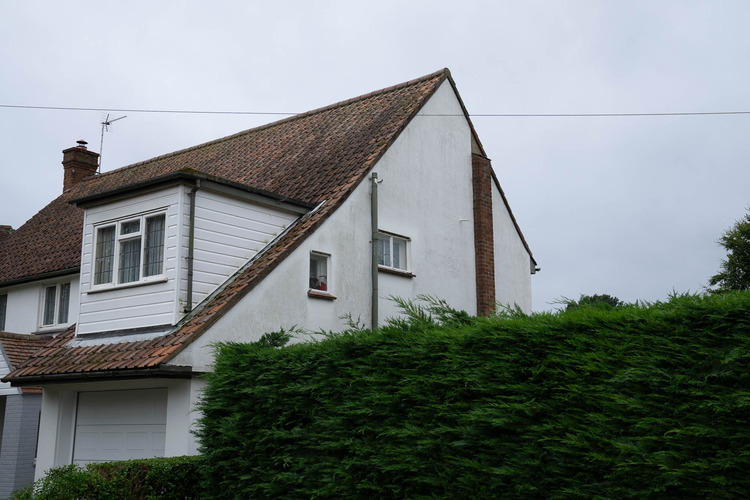 Finished
A completed Nottingham render clean. Two elevations of the same property after a full soft wash treatment — render finish fully restored, algae and atmospheric staining lifted, no surface damage. See more transformations →
What's Included
Everything that comes with a Stardust render clean.
✓ Included in Every Clean
- Render type assessment & condition check
- Plant, lawn and garden feature protection
- Window and door frame protection
- Professional biocide treatment
- Low-pressure soft wash application
- Gentle rinse where appropriate
- Removal of all sheeting and protection
- Final walkthrough & aftercare advice
✗ Not Included
- Render repairs or re-rendering
- Painting or re-coating
- Gutter cleaning (separate service)
- Window cleaning (separate service)
- Pressure washing (we don't do this on render)
If we spot render damage during assessment, we'll flag it before starting and recommend a trusted local rendering specialist.
What We Need From You
A few practical things to have ready before we arrive.
Outside Tap
A working outdoor tap. Soft washing uses much less water than pressure washing but we still need a reliable supply.
Plants & Furniture
Move pots, garden furniture and ornaments away from the walls. Anything we can't move, we'll sheet up before treatment.
Windows Closed
All windows, doors, vents and trickle vents closed before we start. We'll check before applying any treatment.
Pets Indoors
Keep pets and children inside while treatment is applied and during dwell time. Safe to come out once dry.
Don't worry about getting it perfect. We'll walk through requirements when you book and bring all our own protection materials.
Our 5-Step Soft Wash Process
How we go from arrival to clean, undamaged render.
Assess Render
Identify render type, check for cracks or damage, plan chemistry and approach.
Protect Property
Sheet up plants, lawn edges, doors, windows and garden features.
Apply Treatment
Professional biocide applied at low pressure across the full surface.
Dwell & Rinse
15-30 minutes dwell. Gentle rinse or leave to weather, depending on job.
Final Check
Remove sheeting, walkthrough with you, explain aftercare and what to expect.
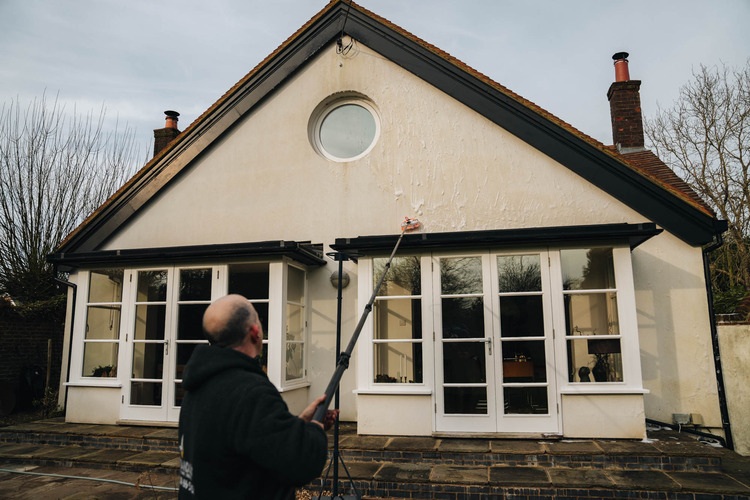
Soft wash treatment in progress — note the low-pressure application and biocide foam coverage across the full surface.
What Our Customers Say
Real reviews from Nottingham customers who've had their render cleaned by Stardust.
"Stephen provided a quote within an hour of our enquiry. The roof cleaning was meticulous – removed years of moss without any damage. Highly recommend."
"Wow what a difference! Steve did a fantastic job and gave us advice on what to use to keep things clean. My next door neighbours were so impressed they asked him to clean theirs too. Couldn't be happier with the results."

Stephen Fudge — Owner, Not a Subcontractor
I founded Stardust Cleaning Services in 2000, after years working as a Local Authority Cleaning Inspector. Render cleaning is one of the services where my inspector background really matters — I've seen the damage caused by the wrong approach, and I've spent 25+ years learning what each render type actually needs.
Every render job is done by me personally. I identify the render, choose the chemistry, set up the protection, and oversee the cleaning from start to finish. No subcontractors, no franchised teams. When you book Stardust, you get the same person whose name is on the business — and the same standards I've held myself to since day one.
— Stephen Fudge, Founder & Owner
Stephen's Other 5-Star Services
Same owner, same standards. Here are the sister services Stephen also runs across the East Midlands.
All four services run personally by Stephen — Former Local Authority Cleaning Inspector with 25+ years experience. Same owner, same equipment standards, same commitment to quality.
Render on Nottingham Properties — What We See
25+ years working across Nottingham has taught us exactly which render types appear where, and how each weathers in the local climate.
Nottingham's housing stock spans every era of British render. The Victorian terraces in The Park Estate and Mapperley Park often have lime render or smooth painted sand & cement on side gables and dormers. Inter-war and 1960s estates across Arnold, Carlton and Gedling are dominated by pebble dash. The post-2000 housing boom in Edwalton, Bingham and Radcliffe on Trent brought K-Rend and monocouche on a huge scale.
Each render type has its own weathering pattern in Nottingham's wet, mild climate — and each needs a different soft wash approach. After 25 years cleaning render across the city, we know what to expect before we even arrive at your property.
Pebble Dash on Inter-War Semis
Arnold · Carlton · Gedling · Mapperley · older parts of West Bridgford
Classic inter-war and 1960s pebble dash semis are by far the most common render type we clean. The deep texture holds algae and atmospheric staining particularly badly — north-facing gables can turn almost completely green within a few years. Soft washing penetrates the texture without dislodging the embedded stones.
K-Rend & Monocouche on New-Builds
Edwalton · Bingham · Radcliffe on Trent · Tollerton · newer Beeston
Modern through-coloured renders dominate post-2000 developments. Brilliant when new, but the silicone water-repellent coating gradually loses effectiveness over 5-8 years and algae moves in. These properties are where the "no pressure washing" rule is most critical — we see permanent patching damage every month from the wrong approach.
Painted Sand & Cement
Wollaton · Sherwood · parts of Beeston and Mapperley
Traditional render with masonry paint over the top. Common on 1930s semis and earlier extensions. The painted surface accumulates atmospheric grime and develops black streaks below windowsills. Soft washing cleans the paint without stripping it — the alternative is a costly re-paint.
Period & Lime Render
The Park · Mapperley Park · Lenton · older parts of Sherwood
Lime render on Victorian and earlier properties needs the gentlest possible treatment. We use heavily diluted biocide and minimal water. For listed buildings or particularly delicate heritage render, we'll recommend a steam-based heritage system or refer to a specialist conservation cleaner.
Render Cleaning Areas
Professional soft wash render cleaning across Nottingham and surrounding areas.
Don't see your area? We cover all locations within 12 miles of Nottingham. See full coverage →
Render Cleaning Across Nottingham
Local to Nottingham and known the city's properties for 25 years — here's the area we cover.
We clean render across Nottingham and the surrounding villages. Our service area covers properties near Nottingham Castle and the city centre, the prestigious gated streets around The Park Estate with their period lime and sand & cement renders, and Victorian properties throughout Mapperley Park.
We regularly soft wash render on properties near Wollaton Hall and the deer park, homes around Trent Bridge and the Nottinghamshire County Cricket Ground in West Bridgford, and the modern K-Rend developments throughout Edwalton and Tollerton.
Further afield we cover village properties around Ruddington, homes near Rushcliffe Country Park, and rendered properties in the commuter villages of Bingham and Radcliffe on Trent. Whether your property is a Victorian terrace with lime render or a modern detached with K-Rend, we have the right approach for your render.
Frequently Asked Questions
The questions Nottingham homeowners ask most about render cleaning.
No — we never pressure wash render and neither should anyone else. Pressure washing strips the surface layer, damages the silicone water-repellent coating on K-Rend and monocouche, forces water behind the render causing freeze-thaw damage, and on through-coloured renders leaves permanent patchy marks.
The right method is soft washing — low-pressure biocide application that kills algae at the root without damaging the surface. If anyone offers to "jet wash" your render, walk away.
Render cleaning starts from £8 per square metre with a minimum charge of £200. A typical 3-bed semi (around 60-80m² of render) costs £400-£600. A larger detached property (100-150m²) costs £700-£1,000.
We provide free, fixed-price quotes after measuring your render area accurately. No hidden extras.
Soft washing is a low-pressure cleaning method using professional biocide chemistry to kill algae, lichen, moss and black mould at the root. The chemistry does the work, not the pressure.
It's the only safe method for render, roof tiles, wooden cladding and other delicate surfaces. Properly applied soft washing typically delivers 2-3 years of clean before re-treatment is needed — versus pressure washing which often shows re-growth within 6-12 months because spores in the surface texture aren't killed.
Green staining is algae — single-celled plants that thrive on damp, shaded surfaces. Black streaks are usually a mix of black algae and atmospheric pollution carried by rain.
The worst-affected walls are usually north-facing, under trees, behind blocked or leaking gutters, or near vegetation. Once spores establish in the surface texture, regular rainfall feeds them — the only way to remove them is biocide treatment.
A properly applied soft wash treatment typically keeps render clean for 2-3 years. Properties with heavy tree cover, north-facing walls, or persistent damp issues may see faster re-growth.
We can recommend lighter top-up treatments at 18-24 months to extend results — much cheaper than a full clean every two years.
We sheet up all plants, lawn edges, and garden features before applying any treatment. The biocide is rinsed and diluted by the time it reaches anything we've protected.
We've never killed a customer's plants in 25 years — but it requires careful preparation, which is why proper soft washing isn't a "spray and go" job. The setup time on a typical render clean is often longer than the actual application.
Yes — these through-coloured silicone-based renders are the most common modern type and we clean them regularly. They need particular care: pressure washing them is catastrophic because it damages the silicone water-repellent coating and exposes the inner colour, leaving permanent patches.
Soft washing with the correct biocide concentration is the only safe method — we adjust the chemistry specifically for silicone-based renders.
Yes. Pebble dash (roughcast) is common on inter-war and 1960s Nottingham houses. The textured surface holds algae and dirt deep in the aggregate, so it always looks worse than smoother renders.
Soft washing penetrates the texture and lifts the contamination without dislodging the stones — pressure washing knocks the pebbles loose, leaving permanent bald patches that can't be repaired without re-rendering.
Yes — but lime render needs the gentlest approach of all. We use a heavily diluted biocide and minimal water. Modern silicone or acrylic-based treatments aren't suitable on lime render because they can interfere with the lime's natural breathability.
For listed buildings or particularly sensitive heritage render, we may recommend a steam-based heritage system or refer you to a specialist conservation cleaner.
Some staining lifts immediately during the rinse stage. Most green algae visibly fades within 24-48 hours.
Heavier black staining and lichen continues to weather away over 4-12 weeks as rain washes the dead organic matter away. The render typically looks its best 6-8 weeks after treatment — which is why some "before and after" photos taken on the day of cleaning don't show the full result.
We use professional biocide products approved for residential exterior use. While the application is in progress, pets and children should stay indoors and away from the treated walls.
Once the treatment has dried (usually a few hours) and any rinsing is complete, the area is safe. We always brief you on safety timing before we start.
We assess every render before treatment. Hairline cracks are the main reason we don't pressure wash — high pressure forces water behind the render through cracks, causing freeze-thaw damage and eventually blown sections.
With soft washing, the gentle application means treatment doesn't penetrate cracks. If we spot significant damage during assessment, we'll flag it before we start and recommend you address the render itself before cleaning.
Render cleaning is best between spring and autumn when temperatures are above 5°C. In winter, biocide chemistry works more slowly, frost can interfere with dwell time, and rinsing carries a risk if temperatures drop overnight.
We'll advise on best timing when you book — most winter enquiries get scheduled for early spring, which is also our quieter period and easier to book in.
Not necessarily. As long as we have access to the property, an outside tap, and we've agreed protection requirements (plants, garden features) in advance, you don't need to be present.
Many customers leave us to it during the workday. We send before-and-after photos and can take payment by card or bank transfer when the work is done.
Most properties benefit from a soft wash every 2-3 years. Properties with heavy tree cover, north-facing walls, or in damp microclimates may need treatment every 18-24 months.
Modern silicone-based renders (K-Rend, monocouche) typically last longer between cleans than traditional sand & cement render or pebble dash, because the silicone surface initially repels water and slows algae establishment.
Get Your Free Render Quote
Send us photos of your render or rough measurements. We'll respond with a fixed price within 20 minutes during business hours.
What Happens Next?
Prefer to talk? Call 0800 999 5767